Personnaliser

OK

Aujourd'hui seulement ! 15€ offerts* dès 119€ d'achat avec les codes : RAKUTEN15

En profiter

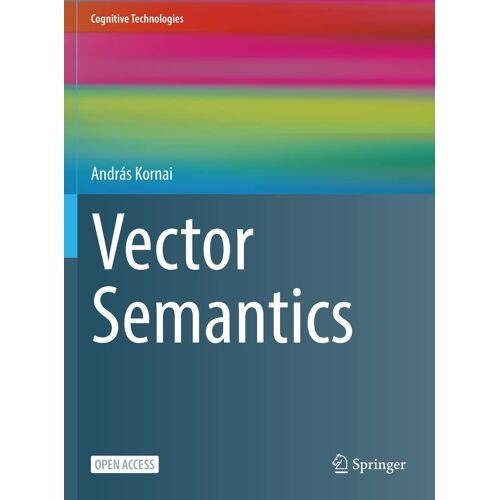
Vector Semantics - Kornai, András

Note : 0

0 avis
  • Soyez le premier à donner un avis

Vous en avez un à vendre ?

Vendez-le-vôtre
Filtrer par :

73,35 €

Produit Neuf

  • Ou 18,34 € /mois

    • Livraison à 0,01 €
    • Livré entre le 18 et le 31 juillet
    Voir les modes de livraison

    RiaChristie

    PRO Vendeur favori

    4,9/5 sur + de 1 000 ventes

    Brand new, In English, Fast shipping from London, UK; Tout neuf, en anglais, expédition rapide depuis Londres, Royaume-Uni;ria9789811956096_dbm

    Nos autres offres

    • 77,49 €

      Produit Neuf

      Ou 19,37 € /mois

      • Livraison : 3,99 €
      • Livré entre le 18 et le 24 juillet
      Voir les modes de livraison
      4,8/5 sur + de 1 000 ventes
      Voir le détail de l'annonce 
    Publicité
     
    Vous avez choisi le retrait chez le vendeur à
    • Payez directement sur Rakuten (CB, PayPal, 4xCB...)
    • Récupérez le produit directement chez le vendeur
    • Rakuten vous rembourse en cas de problème

    Gratuit et sans engagement

    Félicitations !

    Nous sommes heureux de vous compter parmi nos membres du Club Rakuten !

    En savoir plus

    Retour

    Horaires

        Note :


        Avis sur Vector Semantics de Kornai, András Format Broché  - Livre Informatique

        Note : 0 0 avis sur Vector Semantics de Kornai, András Format Broché  - Livre Informatique

        Les avis publiés font l'objet d'un contrôle automatisé de Rakuten.


        Présentation Vector Semantics de Kornai, András Format Broché

         - Livre Informatique

        Livre Informatique - Kornai, András - 30/11/2022 - Broché - Langue : Anglais

        . .

      • Auteur(s) : Kornai, András
      • Editeur : Springer Singapore
      • Langue : Anglais
      • Parution : 30/11/2022
      • Format : Moyen, de 350g à 1kg
      • Nombre de pages : 292
      • Expédition : 615
      • Dimensions : 26.0 x 19.3 x 1.6
      • ISBN : 9789811956096


      • Résumé :

        This open access book introduces Vector semantics, which links the formal theory of word vectors to the cognitive theory of linguistics.

        The computational linguists and deep learning researchers who developed word vectors have relied primarily on the ever-increasing availability of large corpora and of computers with highly parallel GPU and TPU compute engines, and their focus is with endowing computers with natural language capabilities for practical applications such as machine translation or question answering. Cognitive linguists investigate natural language from the perspective of human cognition, the relation between language and thought, and questions about conceptual universals, relying primarily on in-depth investigation of language in use.

        In spite of the fact that these two schools both have 'linguistics' in their name, so far there has been very limited communication between them, as their historical origins, data collection methods, and conceptual apparatuses are quite different. Vector semantics bridges the gap by presenting a formal theory, cast in terms of linear polytopes, that generalizes both word vectors and conceptual structures, by treating each dictionary definition as an equation, and the entire lexicon as a set of equations mutually constraining all meanings.

        Biographie:

        Andr?s Kornai is Senior Research Advisor at SZTAKI Institute of Computer Science and full professor at the Department of Algebra, Budapest University of Technology and Economics (BME). He was educated at Eotvos Lorand University (mathematics) and Stanford (linguistics). He wrote the standard textbook Mathematical Linguistics (Springer 2007) and is past president of the Mathematics of Language SIG of ACL. He is author or co-author of over a hundred refereed publications, four monographs (the last one being Semantics, Springer 2019), and five edited volumes. He is senior member of the IEEE, winner of the ACM Distinguished Scientist award, and member of Academia Europaea.
        Kornai has broad experience in industrial research (Xerox, IBM, BBN) and at startups (MAD, Calera, Belmont, Northern Light, MetaCarta, MindSpeak) working as chief scientist at the last three. Several of these startups were purchased by industry leaders (Nuance, PPD, Microsoft) and muchof the technology developed under his leadership is still in use. He held various visiting and research positions at Rice University, Boston University, and Harvard. He currently leads the SZTAKI/BME Human Language Technology group. MindSpeak), working as chief scientist at the last three. Several of these startups were purchased by industry leaders (Nuance, PPD, Microsoft) and much of the technology developed under his leadership is still in use. He held various visiting and research positions at Rice University, Boston University, and Harvard. He currently leads the SZTAKI/BME Human Language Technology group. MindSpeak), working as chief scientist at the last three. Several of these startups were purchased by industry leaders (Nuance, PPD, Microsoft) and much of the technology developed under his leadership is still in use. He held various visiting and research positions at Rice University, Boston University, and Harvard. He currently leads the SZTAKI/BME Human Language Technology group. MindSpeak), working as chief scientist at the last three. Several of these startups were purchased by industry leaders (Nuance, PPD, Microsoft) and much of the technology developed under his leadership is still in use. He held various visiting and research positions at Rice University, Boston University, and Harvard. He currently leads the SZTAKI/BME Human Language Technology group...

        Sommaire:

        This open access book introduces Vector semantics, which links the formal theory of word vectors to the cognitive theory of linguistics.
        The computational linguists and deep learning researchers who developed word vectors have relied primarily on the ever-increasing availability of large corpora and of computers with highly parallel GPU and TPU compute engines, and their focus is with endowing computers with natural language capabilities for practical applications such as machine translation or question answering. Cognitive linguists investigate natural language from the perspective of human cognition, the relation between language and thought, and questions about conceptual universals, relying primarily on in-depth investigation of language in use.
        In spite of the fact that these two schools both have 'linguistics' in their name, so far there has been very limited communication between them, as their historical origins, data collection methods, and conceptual apparatuses are quite different. Vector semantics bridges the gap by presenting a formal theory, cast in terms of linear polytopes, that generalizes both word vectors and conceptual structures, by treating each dictionary definition as an equation, and the entire lexicon as a set of equations mutually constraining all meanings. ...

        Détails de conformité du produit

        Consulter les détails de conformité de ce produit (

        Personne responsable dans l'UE

        )
        Le choixNeuf et occasion
        Minimum5% remboursés
        Le service clientsÀ votre écoute
        LinkedinFacebookTwitterInstagramYoutubePinterestTiktok
        visavisa
        mastercardmastercard
        klarnaklarna
        paypalpaypal
        floafloa
        americanexpressamericanexpress
        Rakuten Logo
        • Rakuten Kobo
        • Rakuten TV
        • Rakuten Viber
        • Rakuten Viki
        • Plus de services
        • À propos de Rakuten
        Rakuten.com