
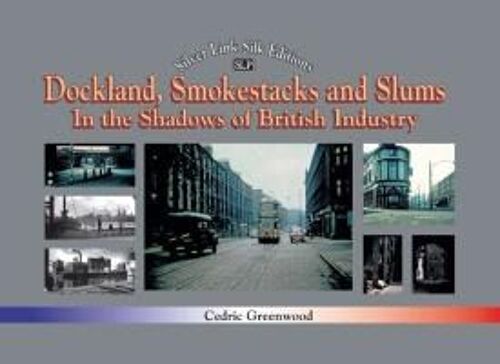
Dockland, Smokestacks and Slums - Greenwood, Cedric
- Format: Broché Voir le descriptif
Vous en avez un à vendre ?
Vendez-le-vôtre42,27 €
Produit Neuf
Ou 10,57 € /mois
- Livraison à 0,01 €
- Livré entre le 5 et le 12 mai
Brand new, In English, Fast shipping from London, UK; Tout neuf, en anglais, expédition rapide depuis Londres, Royaume-Uni;ria9781857945928_dbm
Nos autres offres
-
44,08 €
Produit Neuf
Ou 11,02 € /mois
- Livraison à 0,01 €
- Livré entre le 18 et le 30 mai
Expédition rapide et soignée depuis l`Angleterre - Délai de livraison: entre 10 et 20 jours ouvrés.
-
47,29 €
Produit Neuf
Ou 11,82 € /mois
- Livraison : 3,99 €
- Livré entre le 5 et le 9 mai
-
51,29 €
Produit Neuf
Ou 12,82 € /mois
- Livraison à 0,01 €
Nouvel article expédié dans le 24H à partir des Etats Unis Livraison au bout de 20 à 30 jours ouvrables.
-
55,17 €
Produit Neuf
Ou 13,79 € /mois
- Livraison : 5,00 €
- Livré entre le 5 et le 9 mai
Exp¿di¿ en 7 jours ouvr¿s

- Payez directement sur Rakuten (CB, PayPal, 4xCB...)
- Récupérez le produit directement chez le vendeur
- Rakuten vous rembourse en cas de problème

Gratuit et sans engagement
Félicitations !
Nous sommes heureux de vous compter parmi nos membres du Club Rakuten !
TROUVER UN MAGASIN
Retour
Avis sur Dockland, Smokestacks And Slums Format Broché - Livre Histoire
0 avis sur Dockland, Smokestacks And Slums Format Broché - Livre Histoire
Les avis publiés font l'objet d'un contrôle automatisé de Rakuten.
-
Art Of Modern Rock
2 avis
Occasion dès 50,00 €
-
Anglais - Débutants À B2
1 avis
Neuf dès 26,90 €
Occasion dès 29,99 €
-
Prisons
Occasion dès 43,48 €
-
Wynn Bullock Photography: A Way Of Life
Occasion dès 25,00 €
-
Bmw R1200 Twins (04 - 09) Haynes Repair Manual
Neuf dès 45,11 €
Occasion dès 80,99 €
-
Sola Busca Tarot
Neuf dès 42,49 €
Occasion dès 35,42 €
-
Essential Peirce
Neuf dès 47,86 €
Occasion dès 30,00 €
-
Dancing The Dream
18 avis
Neuf dès 32,46 €
-
Fleet Tactics And Naval Operations, Third Edition
Neuf dès 39,33 €
-
Lewis Carroll's Photography And Modern Childhood
Neuf dès 83,64 €
Occasion dès 39,71 €
-
Phenomenology Of Spirit
Neuf dès 48,69 €
Occasion dès 37,32 €
-
Mobilier Art Deco
Occasion dès 40,00 €
-
Hazel Soan's Art Of The Limited Palette
Neuf dès 27,54 €
-
Color And Light
4 avis
Neuf dès 33,85 €
Occasion dès 52,47 €
-
Videotapes From Hell
Neuf dès 32,00 €
-
Northwest Coast Indian Art
Neuf dès 31,62 €
-
Remember The Times
Neuf dès 26,91 €
-
I Don't Have Enough Faith To Be An Atheist
Neuf dès 23,02 €
-
Dosso Dossi: Court Painter In Renaissance Ferrara
Occasion dès 55,00 €
-
Seasons Of The Witch - Ostara Oracle
1 avis
Neuf dès 23,92 €
Produits similaires
Présentation Dockland, Smokestacks And Slums Format Broché
- Livre Histoire


Résumé :
Part 1: Industry
This book is a photographic study of the 19th and early 20th century British industrial scene when it recovered in the 20 years after World War 2, only to die away altogether in the mid-1980s. Extended captions describe each picture and the introductory texts to each section include some of my contemporary, personal and rather purple descriptions of some of the best, or worst (whichever your viewpoint) of the old industrial scenes in the period 1950-65, when Britain still led the world in engineering, shipbuilding, merchant fleet, commerce, exports, prestige and in almost every other respect. That was the end of an era of pre-eminence. Apparently, all went to waste because thrifty industrialists were reluctant to modernize and adapt in the face of rising foreign competition and there were two decades of industrial strife and short working weeks in the 1970s and '80s for higher wages than could be justified by the competition. The strikes delayed delivery dates on orders and gave British industry a reputation for being slow as well as expensive. Now one of Britain's main exports is scrap metal to foreign steelworks - and we buy foreign steel! This book is also a lament for that lost industrial Britain and probably the only book to extol the aesthetic potential and interesting contribution those industrial elements made to our townscapes. Much of the late-Victorian industrial architecture was a credit to our townscapes. Most of what we see in these pictures in Parts 1 to 4 has disappeared almost without trace, except for archaeology, and the scenes have changed beyond recognition as if those industries had never been there. Thus new generations of residents have no idea of what their home towns produced for us. In some cases we say: 'Good riddance to the dark, satanic mills' but in other cases we are sorry for the loss in terms of employment and the contribution to the economy and the character of the built environment.
Part 2: Industrial Railways and Canals
The Industrial Revolution would not have evolved were it not for the canals to carry the materials and goods to where they were needed. Their main cargo was coal, which, combined with the earlier use of iron ore, led to the invention of the stationary steam engine driving machines and, in turn, to the locomotive engine. The horse-drawn railways taking coal to the river and canal wharves were superseded by steam railways, which competed with the canals and in some cases amalgamated with canal companies to their mutual benefit where there were rail-served canal basins and wharves, as in the Black Country. The economy and speed of the railways gradually superseded the canals, which declined during the first half of the 20th century, except for some of the broad canals and canalized river 'navigations' radiating inland from the Humber that still serve industry in Nottinghamshire and Yorkshire. Most of the traffic taken by the canals and the railways is now conveyed by lorries using the public highway instead of their own right of way.
Part 3: Wharves and Warehouses
The photographs in part 3 are almost entirely of the older docks and riverside wharves on the Pool of London and the Mersey docks at Birkenhead and Liverpool. London River was the name used by lightermen, bargemen, tugmen and writers of the industrial era for the reaches of the Thames under the jurisdiction and conservancy of the City of London Corporation, from the London Stone at Staines, Middlesex, to the London Stone off the Isle of Grain in Kent. From the mid-19th century to the mid-20th century 'dockland' was what we called the neighborhood of the docks but in London it was regenerated as The Docklands, which are not docks at all but ...
Sommaire:
Part 1: Industry
This book is a photographic study of the 19th and early 20th century British industrial scene when it recovered in the 20 years after World War 2, only to die away altogether in the mid-1980s. Extended captions describe each picture and the introductory texts to each section include some of my contemporary, personal and rather purple descriptions of some of the best, or worst (whichever your viewpoint) of the old industrial scenes in the period 1950-65, when Britain still led the world in engineering, shipbuilding, merchant fleet, commerce, exports, prestige and in almost every other respect. That was the end of an era of pre-eminence. Apparently, all went to waste because thrifty industrialists were reluctant to modernize and adapt in the face of rising foreign competition and there were two decades of industrial strife and short working weeks in the 1970s and '80s for higher wages than could be justified by the competition. The strikes delayed delivery dates on orders and gave British industry a reputation for being slow as well as expensive. Now one of Britain's main exports is scrap metal to foreign steelworks - and we buy foreign steel! This book is also a lament for that lost industrial Britain and probably the only book to extol the aesthetic potential and interesting contribution those industrial elements made to our townscapes. Much of the late-Victorian industrial architecture was a credit to our townscapes. Most of what we see in these pictures in Parts 1 to 4 has disappeared almost without trace, except for archaeology, and the scenes have changed beyond recognition as if those industries had never been there. Thus new generations of residents have no idea of what their home towns produced for us. In some cases we say: 'Good riddance to the dark, satanic mills' but in other cases we are sorry for the loss in terms of employment and the contribution to the economy and the character of the built environment.
Part 2: Industrial Railways and Canals
The Industrial Revolution would not have evolved were it not for the canals to carry the materials and goods to where they were needed. Their main cargo was coal, which, combined with the earlier use of iron ore, led to the invention of the stationary steam engine driving machines and, in turn, to the locomotive engine. The horse-drawn railways taking coal to the river and canal wharves were superseded by steam railways, which competed with the canals and in some cases amalgamated with canal companies to their mutual benefit where there were rail-served canal basins and wharves, as in the Black Country. The economy and speed of the railways gradually superseded the canals, which declined during the first half of the 20th century, except for some of the broad canals and canalized river 'navigations' radiating inland from the Humber that still serve industry in Nottinghamshire and Yorkshire. Most of the traffic taken by the canals and the railways is now conveyed by lorries using the public highway instead of their own right of way.
Part 3: Wharves and Warehouses
The photographs in part 3 are almost entirely of the older docks and riverside wharves on the Pool of London and the Mersey docks at Birkenhead and Liverpool. London River was the name used by lightermen, bargemen, tugmen and writers of the industrial era for the reaches of the Thames under the jurisdiction and conservancy of the City of London Corporation, from the London Stone at Staines, Middlesex, to the London Stone off the Isle of Grain in Kent. From the mid-19th century to the mid-20th century 'dockland' was what we called the neighborhood of the docks but in London it was regenerated as The Docklands, which are not docks at all but ...
Détails de conformité du produit
Personne responsable dans l'UE