
60,55 €
Produit Neuf
Ou 15,14 € /mois
- Livraison à 0,01 €
- Livré entre le 25 août et le 10 septembre
Brand new, In English, Fast shipping from London, UK; Tout neuf, en anglais, expédition rapide depuis Londres, Royaume-Uni;ria9783031014420_dbm
Nos autres offres
-
56,56 €
Produit Neuf
Ou 14,14 € /mois
- Livraison : 3,99 €
- Livré entre le 25 août et le 1 septembre
Voir le détail de l'annonce -
60,55 €
Produit Neuf
Ou 15,14 € /mois
- Livraison à 0,01 €
- Livré entre le 25 août et le 10 septembre
Brand new, In English, Fast shipping from London, UK; Tout neuf, en anglais, expédition rapide depuis Londres, Royaume-Uni;ria9783031014420_dbm
Voir le détail de l'annonce

- Payez directement sur Rakuten (CB, PayPal, 4xCB...)
- Récupérez le produit directement chez le vendeur
- Rakuten vous rembourse en cas de problème

Gratuit et sans engagement
Félicitations !
Nous sommes heureux de vous compter parmi nos membres du Club Rakuten !
TROUVER UN MAGASIN
Retour
Avis sur Bacterial Sensors de Jan Roelof Meer Format Broché - Livre
0 avis sur Bacterial Sensors de Jan Roelof Meer Format Broché - Livre
Les avis publiés font l'objet d'un contrôle automatisé de Rakuten.
Présentation Bacterial Sensors de Jan Roelof Meer Format Broché
- Livre


Résumé :
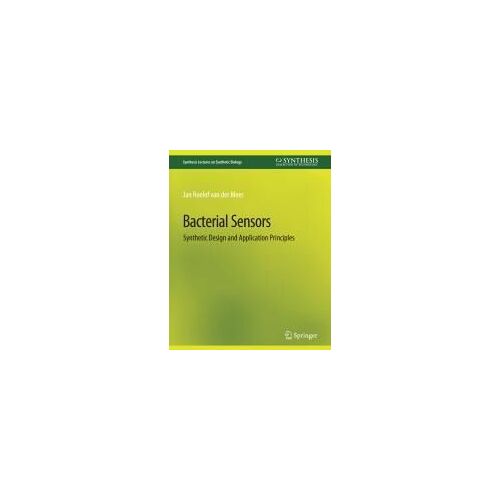
Bacterial reporters are live, genetically engineered cells with promising application in bioanalytics. They contain genetic circuitry to produce a cellular sensing element, which detects the target compound and relays the detection to specific synthesis of so-called reporter proteins (the presence or activity of which is easy to quantify). Bioassays with bacterial reporters are a useful complement to chemical analytics because they measure biological responses rather than total chemical concentrations. Simple bacterial reporter assays may also replace more costly chemical methods as a first line sample analysis technique. Recent promising developments integrate bacterial reporter cells with microsystems to produce bacterial biosensors. This lecture presents an in-depth treatment of the synthetic biological design principles of bacterial reporters, the engineering of which started as simple recombinant DNA puzzles, but has now become a more rational approach of choosing and combining sensing, controlling and reporting DNA 'parts'. Several examples of existing bacterial reporter designs and their genetic circuitry will be illustrated. Besides the design principles, the lecture also focuses on the application principles of bacterial reporter assays. A variety of assay formats will be illustrated, and principles of quantification will be dealt with. In addition to this discussion, substantial reference material is supplied in various Annexes. Table of Contents: Short History of the use of Bacteria for Biosensing and Bioreporting / Genetic Engineering Concepts / Measuring with Bioreporters / Epilogue
Biographie:
Jan Roelof van der Meer is Associate Professor in Environmental Microbiology at the Department of Fundamental Microbiology of the University of Lausanne, Switzerland. He joined the University of Lausanne in 2003, after spending ten years as Group Leader at the Swiss Institute for Aquatic Science and Technology (Eawag). He completed a MSc degree in Environmental Sciences from the Wageningen Agricultural University (The Netherlands), and holds a PhD degree of the same university specializing in molecular microbiology. Before joining Eawag he was postdoctoral fellow at the Dutch National Dairy Institute. His primary field of interest concerns the many-fold interactions of bacteria with chemical pollutants in the environment. In ongoing research his group actively pursues the evolutionary mechanisms underlying adaptation of bacteria to using organic pollutants as unique carbon and energy sources. Another part of his research focuses on pollutant degradation by bacteria in the environment.A third activity of his group concentrates on the design, construction and application of bacterial bioreporters for environmental quality measurements, which is the topic of this lecture. Dr. van der Meer coordinates the FP7 large integrated European project BACSIN on bacterial survival and adaptation in the environment. Before that he served as coordinator of the FP7 project FACEiT, which focused on biology-based detection tools for environmental quality assessment....
Détails de conformité du produit
Personne responsable dans l'UE