
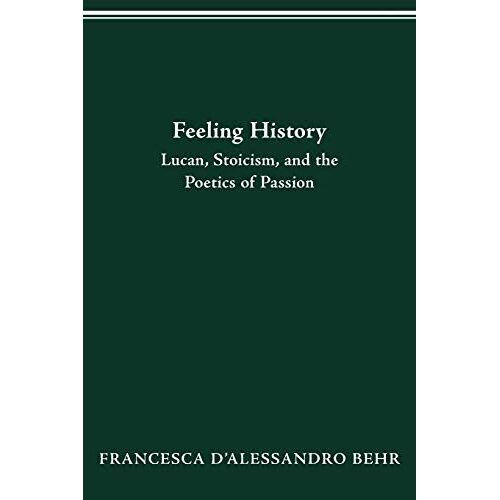
FEELING HISTORY - D'Alessandro Behr, Francesca
- Format: Broché Voir le descriptif
Vous en avez un à vendre ?
Vendez-le-vôtre76,99 €
Occasion · Comme Neuf
Ou 19,25 € /mois
- Livraison : 25,00 €
- Livré entre le 9 et le 18 mai

- Payez directement sur Rakuten (CB, PayPal, 4xCB...)
- Récupérez le produit directement chez le vendeur
- Rakuten vous rembourse en cas de problème

Gratuit et sans engagement
Félicitations !
Nous sommes heureux de vous compter parmi nos membres du Club Rakuten !
TROUVER UN MAGASIN
Retour
Avis sur Feeling History Format Broché - Livre Critique littéraire
0 avis sur Feeling History Format Broché - Livre Critique littéraire
Les avis publiés font l'objet d'un contrôle automatisé de Rakuten.
-
Yoshitomo Nara: Pinacoteca
Occasion dès 62,33 €
-
Pomellato
Occasion dès 80,00 €
-
Complete Ielts Bands 6.5-7.5 Workbook Without Answers With Audio Cd
Neuf dès 38,71 €
-
Warehouse Management
Neuf dès 66,26 €
-
Storm Chasing Handbook, 2nd. Ed.
Neuf dès 64,46 €
-
Dosso Dossi: Court Painter In Renaissance Ferrara
Occasion dès 55,00 €
-
Professional Goldsmithing : A Contemporary Guide To Traditional Jewelry Techniques
Occasion dès 110,38 €
-
Pucci De Rossi: '71-'96
Occasion dès 49,70 €
-
Yngwie Malmsteen Anthology
1 avis
Neuf dès 49,99 €
-
Sennelier L'artisan Des Couleurs
Occasion dès 67,00 €
-
Medicine 1 - Student's Book
Occasion dès 47,99 €
-
Encyclopedia Of Hydrangeas
Occasion dès 51,25 €
-
The Colouring, Bronzing And Patination Of Metals
Neuf dès 74,06 €
Occasion dès 60,00 €
-
Hilgard S Introduction To Psychology Rita L. Atkinson
Occasion dès 95,99 €
-
The Ultimate Tsa Guide
Neuf dès 40,18 €
-
Dc Finest: Justice Society Of America: The Plunder Of The Psycho-Pirate
Neuf dès 39,20 €
-
Los Detectives Salvajes (Coleccion Compactos)
Occasion dès 87,99 €
-
L'allemand B2 Pack Téléchargement - Avec 1 Livre, 1 Livret Et 1 Téléchargement Audio
Neuf dès 49,90 €
Occasion dès 62,61 €
-
Simone Pheulpin
Neuf dès 79,00 €
Occasion dès 134,22 €
-
Dc Finest: The Flash: The Fastest Man Dead
Neuf dès 39,88 €
Produits similaires
Présentation Feeling History Format Broché
- Livre Critique littéraire


Résumé :
Feeling History is a study of apostrophe (i.e., the rhetorical device in which the narrator talks directly to his characters) in Lucan's Bellum Civile. Through the narrator's direct addresses, irony, and grotesque imagery, Lucan appears not as a nihilist, but as a character deeply concerned about ethics. The purpose of this book is to demonstrate how Lucan's style represents a criticism of the Roman approach to history, epic, ethics, and aesthetics. The book's chief interest lies in the ethical and moral stance that the poet-narrator takes toward his characters and his audience. To this end, Francesca D'Alessandro Behr studies the ways in which the narrator communicates ethical and moral judgments. Lucan's retelling of this central historical epic triggers in the mind of the reader questions about the validity of the Roman imperial project as a whole. An analysis of selected apostrophes from the Bellum Civile allows us to confront issues that are behind Lucan's disquieting imagery: how can we square the poet's Stoic perspectives with his poetically conveyed emotional urgency? Lucan's approach seems inspired by Aristotle, especially his Poetics, as much as by Stoic philosophy. In Lucan's aesthetic project, participation and alienation work as phases through which the narrator leads the reader to a desired understanding of his work of art. At the same time, the reader is confronted with the ends and limits of the aesthetic enterprise in general. Lucan's long-acknowledged political engagement must therefore be connected to his philosophical and aesthetic stance. In the same way that Lucan is unable to break free from the Virgilian model, neither can he develop a defense of morality outside of the Stoic mold. His philosophy is not a crystal ball to read the future or a numbing drug imposing acceptance. The philosophical vision that Lucan finds intellectually and aesthetically compelling does not insulate his characters (and readers) from suffering, nor does it excuse them from wrongdoing. Rather, it obligates them to confront the responsibilities and limits of acting morally in a chaotic world.
Biographie:
Francesca D'Alessandro Behr is associate professor of classics and Italian studies at the University of Houston....
Sommaire:
Feeling History is a study of apostrophe (i.e., the rhetorical device in which the narrator talks directly to his characters) in Lucan's Bellum Civile. Through the narrator's direct addresses, irony, and grotesque imagery, Lucan appears not as a nihilist, but as a character deeply concerned about ethics. The purpose of this book is to demonstrate how Lucan's style represents a criticism of the Roman approach to history, epic, ethics, and aesthetics. The book's chief interest lies in the ethical and moral stance that the poet-narrator takes toward his characters and his audience. To this end, Francesca D'Alessandro Behr studies the ways in which the narrator communicates ethical and moral judgments. Lucan's retelling of this central historical epic triggers in the mind of the reader questions about the validity of the Roman imperial project as a whole. An analysis of selected apostrophes from the Bellum Civile allows us to confront issues that are behind Lucan's disquieting imagery: how can we square the poet's Stoic perspectives with his poetically conveyed emotional urgency? Lucan's approach seems inspired by Aristotle, especially his Poetics, as much as by Stoic philosophy. In Lucan's aesthetic project, participation and alienation work as phases through which the narrator leads the reader to a desired understanding of his work of art. At the same time, the reader is confronted with the ends and limits of the aesthetic enterprise in general. Lucan's long-acknowledged political engagement must therefore be connected to his philosophical and aesthetic stance. In the same way that Lucan is unable to break free from the Virgilian model, neither can he develop a defense of morality outside of the Stoic mold. His philosophy is not a crystal ball to read the future or a numbing drug imposing acceptance. The philosophical vision that Lucan finds intellectually and aesthetically compelling does not insulate his characters (and readers) from suffering, nor does it excuse them from wrongdoing. Rather, it obligates them to confront the responsibilities and limits of acting morally in a chaotic world....
Détails de conformité du produit
Personne responsable dans l'UE