
90,24 €
Produit Neuf
Ou 22,56 € /mois
- Livraison : 25,00 €
- Livré entre le 9 et le 14 septembre
Apres acceptation de la commande, le delai moyen d'expedition depuis le Japon est de 48 heures. Le delai moyen de livraison est de 3 a 4 semaines. En cas de circonstances exceptionnelles, les delais peuvent s'etendre jusqu'à 2 mois.

- Payez directement sur Rakuten (CB, PayPal, 4xCB...)
- Récupérez le produit directement chez le vendeur
- Rakuten vous rembourse en cas de problème

Gratuit et sans engagement
Félicitations !
Nous sommes heureux de vous compter parmi nos membres du Club Rakuten !
TROUVER UN MAGASIN
Retour
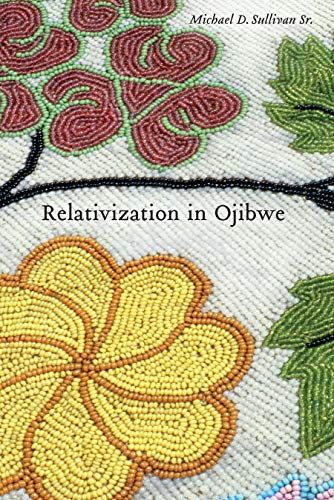
Avis sur Relativization In Ojibwe de Michael D Sullivan Format Broché - Livre
0 avis sur Relativization In Ojibwe de Michael D Sullivan Format Broché - Livre
Les avis publiés font l'objet d'un contrôle automatisé de Rakuten.
Présentation Relativization In Ojibwe de Michael D Sullivan Format Broché
- Livre


Résumé : Biographie: Sommaire:
Acknowledgments
List of Abbreviations
1. A Basic Introduction to the Study
1.1. Purpose and Goals
1.2. Ojibwe Relative Clauses
1.2.1. What Is a Relative Clause?
1.2.2. Linguistic Preliminaries
1.2.3. Ojibwe RCs
1.2.3.1. Core versus Relative Root Arguments
1.2.4. Variation in SW Ojibwe
1.3. Algonquian Dialectology
1.3.1. Ojibwe Dialects
1.3.2. Implications of Classifications
1.3.3. Southwestern Ojibwe
1.3.4. Literature Review: Dialect Studies
1.3.4.1. Rhodes and Todd (1981)
1.3.4.2. Valentine (1994)
1.3.4.3. Nichols (2011, 2012)
1.4. Literature Review: Algonquian RCs
1.4.1. Rhodes (1996)
1.4.2. Johns (1982)
1.4.3. Johansson (2011)
1.4.4. Johansson (2013)
1.4.5. Lochbihler and Mathieu (2013)
1.5. Theoretical Preliminaries
1.5.1. Nonconfigurationality
1.5.1.1. The Pronominal Argument Hypothesis (PAH)
1.5.2. The Mirror Principle and the Minimalist Program
1.5.2.1. Feature Checking
1.5.2.2. Independent versus Conjunct
1.5.3. Split-CP Hypothesis (Rizzi 1997)
1.6. Conclusion
1.6.1. Concluding Remarks
2. Ojibwe Morphosyntax
2.1. Typological Preliminaries
2.2. The Sound System
2.2.1. The Vowels
2.2.2. Consonant Inventory
2.3. Morphology
2.3.1. Nouns
2.3.2. Pronouns
2.3.3. Verbal Morphology
2.3.3.1. Palatalization
2.3.3.2. Nominalization
2.3.4. Preverbs
2.4. Inflectional Subsystems
2.4.1. Modes
2.5. Topicality Hierarchy
2.5.1. Obviation
2.6. Initial Change
2.6.1. Wh-questions
2.6.2. Participles
2.6.3. Past/Completive
2.7. Word Order and Clause Structure
2.7.1. The Noun Phrase
2.7.2. Basic Constituency Order
2.7.3. The Left Periphery
2.7.3.1. Focus
2.7.3.2. Topic
3. Methodology
3.1. Survey Apparatus
3.2. Archival Data
3.3. Findings
3.3.1. ji-/da- Complementizer, jibwaa/dabwaa
3.3.2. Preterit Peripheral Suffixes
3.3.3. Neutralization of Inanimate Plural in Conjunct
3.3.4. Number under Obviation
3.3.5. Restructuring of Dependent Stems
3.3.6. Core Demonstratives
3.3.7. Phonological Variation
3.3.7.1. Nasal Behavior
3.3.7.1.1. Initial /n/
3.3.7.1.2. Final Nasal in Negation Suffix -sii(n)
3.3.7.1.3. Final Nasal /n/ Behavior
3.3.7.1.4. Nasal Spreading
3.3.7.2. Initial /g/
3.3.7.3. Vowel and Glide Quality
3.3.7.3.1. Labialization and Rounding
3.3.7.3.2. Vowel Height /i/ versus /a/
3.3.7.3.3. Articulation of Glides /y/ and /w/
3.3.7.4. Other Points of Variation
3.3.7.4.1. Women’...
s Dictionary, among other publications.
?...
s Names -k(we)
3.3.7.4.2. /t/ Epenthesis
3.3.7.4.3. Syncope
3.3.8. Lexical Variation
3.3.8.1. Body-Part-Incorporating Suffix -e
3.3.8.2. -ngwaam(i) Verbs
3.3.8.3. -aadage/-aadagaa Verbs
3.3.9. Animacy Status
3.3.10. TA -aw Stem Contraction
3.3.11. Initial Vowel Change
3.3.12. Iterative Suffix
3.3.13. Participles
3.3.13.1. Southern Strategies
3.3.13.2. Innovations
3.3.13.3. gaa- Participles
3.4. Discussion
3.4.1. Geographic Variation
3.4.1.1. Leech Lake as a Transitional Area
3.4.1.2. Intelligibility
3.4.2. Age-Graded Variation
3.4.3. Free Variation
4. Relativization in Ojibwe
4.1. Ojibwe Relative Clauses
4.1.1. Findings: Core Argument versus Relative Root Arguments
4.1.2. Variation in Relativization Strategies
4.2. Theoretical Framework
4.2.1. Plain Conjunct Morphosyntax
4.2.1.1. Brittain (2001)
4.2.2. Split-CP Hypothesis (Rizzi 1997)
4.2.2.1. FinP as Host to Conjunct
4.2.2.2. FocP Host to IC
4.2.2.3. ForceP and RCs
4.2.3. Cyclicity and Phases (Bruening 2001)
4.3. Refining the Analysis
4.3.1. Feature Bundles
4.3.2. The Structure of the Ojibwe CP
4.3.3. Internally versus Externally Headed RCs
4.3.4. Concluding Remarks
5. Conclusions
5.1. Review
5.1.1. Implications of the Findings
5.2. Limitations
5.2.1. Obsolescence
5.2.2. Access
5.2.3. L2 Interference
5.3. Comparisons within the Algonquian Family
5.3.1. IC
5.3.2. Algonquian Participles
5.3.2.1. PA Participles
5.4. Directions for Future Research
Appendix: VTA Paradigms
Notes
References
Index
Détails de conformité du produit
Personne responsable dans l'UE