
48,98 €
Produit Neuf
Ou 12,25 € /mois
- Livraison : 3,99 €
- Livré entre le 18 et le 25 septembre
Nos autres offres
-
78,46 €
Produit Neuf
Ou 19,62 € /mois
- Livraison à 0,01 €
Expédition rapide et soignée depuis l`Angleterre - Délai de livraison: entre 10 et 20 jours ouvrés.
Voir le détail de l'annonce

- Payez directement sur Rakuten (CB, PayPal, 4xCB...)
- Récupérez le produit directement chez le vendeur
- Rakuten vous rembourse en cas de problème

Gratuit et sans engagement
Félicitations !
Nous sommes heureux de vous compter parmi nos membres du Club Rakuten !
TROUVER UN MAGASIN
Retour
Avis sur The Human Factor de Archie Brown Format Relié - Livre Histoire
0 avis sur The Human Factor de Archie Brown Format Relié - Livre Histoire
Les avis publiés font l'objet d'un contrôle automatisé de Rakuten.
-
Sf2a : Scientific Highlights 2004
Occasion dès 69,00 €
-
Diagrammatic Chart Of World History 5000 Years Of History
Occasion dès 29,90 €
-
Les Clés De L'allemand D'aujourd'hui - 408 Repères Grammaticaux
2 avis
Occasion dès 37,00 €
-
Paroissien Romain - Chant Grégorien - Contenant La Messe Et L'office Pour Les Dimanches Et Les Fête - 1936 - Desclée & Cie
Occasion dès 30,00 €
-
German Guided Missiles Of The Second World War
Occasion dès 30,90 €
-
La Version Allemande Systématique
2 avis
Occasion dès 45,80 €
-
Sony A99 Ii
Neuf dès 56,83 €
Occasion dès 34,23 €
-
Lázár
Neuf dès 31,05 €
Occasion dès 27,80 €
-
Entreprise Et Environnement - Une Synergie Nouvelle
1 avis
Occasion dès 35,80 €
-
The Kitchen Diaries Ii
Neuf dès 51,54 €
Occasion dès 31,20 €
-
Litteratures Allemandes - Anthologie Et Méthodes D'approche Des Textes, 2ème Édition
2 avis
Occasion dès 27,74 €
-
Complete Masterworks
3 avis
Neuf dès 41,22 €
-
Deep Learning With Python
Occasion dès 36,31 €
-
Communes
2 avis
Occasion dès 28,00 €
-
Nouveau Testament Occitan & Rituel Cathare Xiiie Siècle, Transcription Yvan Roustit
Occasion dès 39,89 €
-
Co-Creative Science
Occasion dès 39,39 €
-
Grant Wood
Neuf dès 38,41 €
-
Another Fashion Book
Occasion dès 28,20 €
-
New Headway Pre-Intermediate - Workbook Without Answers
Occasion dès 29,43 €
-
Terraform: Up And Running
Neuf dès 71,91 €
Occasion dès 39,18 €
Produits similaires
Présentation The Human Factor de Archie Brown Format Relié
- Livre Histoire


Résumé :
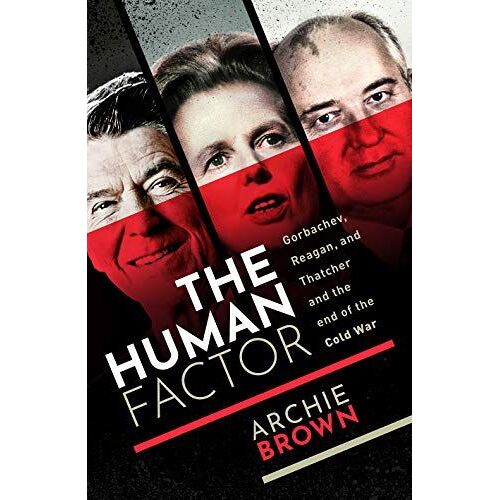
In this penetrating analysis of the role of political leadership in the Cold War's ending, Archie Brown shows why the popular view that Western economic and military strength left the Soviet Union with no alternative but to admit defeat is wrong. To understand the significance of the parts played by Mikhail Gorbachev, Ronald Reagan and Margaret Thatcher in East-West relations in the second half of the 1980s, Brown addresses several specific questions: What were the values and assumptions of these leaders, and how did their perceptions evolve? What were the major influences on them? To what extent were they reflecting the views of their own political establishment or challenging them? How important for ending the East-West standoff were their interrelations? Would any of the realistically alternative leaders of their countries at that time have pursued approximately the same policies? The Cold War got colder in the early 1980s and the relationship between the two military superpowers, the USA and the Soviet Union, each of whom had the capacity to annihilate the other, was tense. By the end of the decade, East-West relations had been utterly transformed, with most of the dividing lines -including the division of Europe- removed. Engagement between Gorbachev and Reagan was a crucial part of that process of change. More surprising was Thatcher's role. Regarded by Reagan as his ideological and political soulmate, she formed also a strong and supportive relationship with Gorbachev (beginning three months before he came to power). Promoting Gorbachev in Washington as a man to do business with, she became, in the words of her foreign policy adviser Sir Percy Cradock, an agent of influence in both directions....
Biographie:
Archie Brown is Emeritus Professor of Politics at the University of Oxford, a Fellow of the British Academy, and an International Honorary Member of the American Academy of Arts and Sciences. He is the author of numerous books on the former Soviet Union and its demise, including The Gorbachev Factor (1996, also published by Oxford University Press) and The Rise and Fall of Communism (2009), both of which won both the Alec Nove Prize and the Political Studies Association's W.J.M. Mackenzie Prize for best politics book of the year. A leading authority on Mikhail Gorbachev, he was the first person to draw Margaret Thatcher's attention to Gorbachev (at a 1983 Chequers seminar) as a reform-minded likely future Soviet leader....
Sommaire:
...
Détails de conformité du produit
Personne responsable dans l'UE