
Nouvel article expédié dans le 24H à partir des Etats Unis Livraison au bout de 14 à 21 jours ouvrables.

- Payez directement sur Rakuten (CB, PayPal, 4xCB...)
- Récupérez le produit directement chez le vendeur
- Rakuten vous rembourse en cas de problème

Gratuit et sans engagement
Félicitations !
Nous sommes heureux de vous compter parmi nos membres du Club Rakuten !
TROUVER UN MAGASIN
Retour
Avis sur Virtue's Splendor Format Broché - Livre Philosophie
0 avis sur Virtue's Splendor Format Broché - Livre Philosophie
Les avis publiés font l'objet d'un contrôle automatisé de Rakuten.
-
Nkjv Study Bible, Leathersoft, Brown, Comfort Print
Neuf dès 73,27 €
-
Design For Motion
Neuf dès 104,46 €
-
Ellen Von Unwerth: Revenge
1 avis
Neuf dès 56,17 €
-
Méthode Assimil Espagnol 4cd Et 1 Livre
Occasion dès 56,00 €
-
Book Of The Nsu Prima 1956-1964 Prima D - V - Iii - Iiik -
Neuf dès 48,74 €
-
Der Mythus Des Zwangzigsten Jahrhunderts
Occasion dès 49,00 €
-
Ugaritic Narrative Poetry
Neuf dès 42,02 €
-
Elvis Presley On Tour Livre Usa 120 Pages 240 Photos Inedites ! Rare!
Occasion dès 59,00 €
-
Jimmy Corrigan
Neuf dès 41,25 €
Occasion dès 64,22 €
-
The Philosophy Of Grammar
Neuf dès 46,66 €
-
Xbox Series X : (J)
Neuf dès 43,99 €
-
Georg Baselitz
Neuf dès 137,45 €
Occasion dès 91,61 €
-
Complete Swedish Beginner To Intermediate Course
1 avis
Neuf dès 49,73 €
-
Alinea
1 avis
Occasion dès 55,00 €
-
Flight Attendants
Occasion dès 40,99 €
-
Mathématiques 1re S Et E : Géométrie Et Statistiques (Collection Terracher)
2 avis
Occasion dès 46,96 €
-
Des Bienfaits, 2 Tomes
1 avis
Occasion dès 45,80 €
-
Michael Kenna: Silver Haikus
3 avis
Neuf dès 52,52 €
-
Les Outils Dans Les Balkans Du Moyen Âge À Nos Jours
Occasion dès 50,00 €
-
Communion
Neuf dès 44,71 €
Produits similaires
Présentation Virtue's Splendor Format Broché
- Livre Philosophie


Résumé :
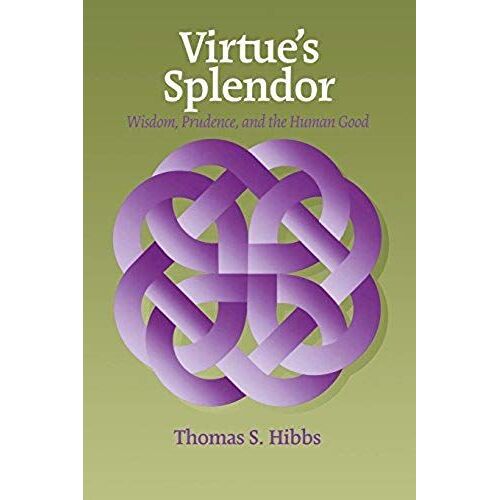
In recent years, there has been a remarkable resurgence of interest in classical conceptions of what it means for human beings to lead a good life. Although the primary focus of the return to classical thought has been Aristotle's account of virtue, the ethics of Aquinas has also received much attention. Our understanding of the integrity of Aquinas's thought has clearly benefited from the recovery of the ethics of virtue. Understood from either a natural or a supernatural perspective, the good life according to Aquinas involves the exercise not just of the moral virtues, but also of the intellectual virtues. Following Aristotle, Aquinas divides the intellectual virtues into the practical, which have either doing (prudence) or making (art) as an end, and the theoretical or speculative, which are ordered to knowing for its own sake (understanding, knowledge, and wisdom). One of the intellectual virtues, namely, prudence has received much recent attention. With few exceptions, however, contemporary discussions of Aquinas ignore the complex and nuanced relationships among, and comparisons between, the different sorts of intellectual virtue. Even more striking is the general neglect of the speculative, intellectual virtues and the role of contemplation in the good life. In Virtue's Splendor Professor Hibbs seeks to overcome this neglect, approaching the ethical thought of Thomas Aquinas in terms of the great debate of antiquity and the Middle Ages concerning the rivalry between the active and the contemplative lives, between prudence and wisdom as virtues perfective of human nature. In doing so, he puts before the reader the breadth of Aquinas's vision of the good life.
Biographie:
Thomas Hibbs is Associate Professor of Philosophy at Boston College....
Sommaire:
In recent years, there has been a remarkable resurgence of interest in classical conceptions of what it means for human beings to lead a good life. Although the primary focus of the return to classical thought has been Aristotle's account of virtue, the ethics of Aquinas has also received much attention. Our understanding of the integrity of Aquinas's thought has clearly benefited from the recovery of the ethics of virtue. Understood from either a natural or a supernatural perspective, the good life according to Aquinas involves the exercise not just of the moral virtues, but also of the intellectual virtues. Following Aristotle, Aquinas divides the intellectual virtues into the practical, which have either doing (prudence) or making (art) as an end, and the theoretical or speculative, which are ordered to knowing for its own sake (understanding, knowledge, and wisdom). One of the intellectual virtues, namely, prudence has received much recent attention. With few exceptions, however, contemporary discussions of Aquinas ignore the complex and nuanced relationships among, and comparisons between, the different sorts of intellectual virtue. Even more striking is the general neglect of the speculative, intellectual virtues and the role of contemplation in the good life. In Virtue's Splendor Professor Hibbs seeks to overcome this neglect, approaching the ethical thought of Thomas Aquinas in terms of the great debate of antiquity and the Middle Ages concerning the rivalry between the active and the contemplative lives, between prudence and wisdom as virtues perfective of human nature. In doing so, he puts before the reader the breadth of Aquinas's vision of the good life....
Détails de conformité du produit
Personne responsable dans l'UE