
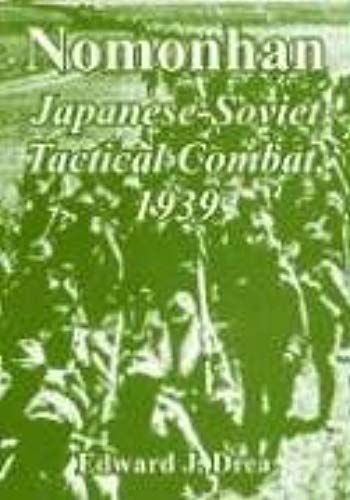
Nomonhan - Drea, Edward J.
- Format: Broché Voir le descriptif
Vous en avez un à vendre ?
Vendez-le-vôtre43,30 €
Produit Neuf
Ou 10,83 € /mois
- Livraison à 0,01 €
- Livré entre le 30 juillet et le 11 août
Brand new, In English, Fast shipping from London, UK; Tout neuf, en anglais, expédition rapide depuis Londres, Royaume-Uni;ria9781410222855_dbm

- Payez directement sur Rakuten (CB, PayPal, 4xCB...)
- Récupérez le produit directement chez le vendeur
- Rakuten vous rembourse en cas de problème

Gratuit et sans engagement
Félicitations !
Nous sommes heureux de vous compter parmi nos membres du Club Rakuten !
TROUVER UN MAGASIN
Retour
Avis sur Nomonhan Format Broché - Livre Sciences de la vie et de la terre
0 avis sur Nomonhan Format Broché - Livre Sciences de la vie et de la terre
Les avis publiés font l'objet d'un contrôle automatisé de Rakuten.
-
Die Luzerner Chronik Des Diebold Schilling, Aus Dem Jahre 1513
Occasion dès 49,50 €
-
Monster Hunter: World - Official Complete Works
1 avis
Neuf dès 58,42 €
-
Zao Wou-Ki
Occasion dès 27,50 €
-
Sartor Resartus - La Philosophie Du Vêtement Carlyle
Occasion dès 50,00 €
-
The Velvet Rage
Neuf dès 33,34 €
-
Cambridge English Skills Real Listening And Speaking 1 With Answers And Audio Cd
1 avis
Occasion dès 48,07 €
-
Refocus: The Films Of Doris Wishman
Neuf dès 46,03 €
-
Saab 95 & 96 Petrol (66 - 76) Haynes Repair Manual
Neuf dès 48,46 €
-
Saab 9-3 Petrol & Diesel (98 - Aug 02) Haynes Repair Manual
Neuf dès 40,25 €
-
Pink Floyd The Wall Guitar - Tablature Edition
Occasion dès 34,00 €
-
Sacred Art Of Nepal
Neuf dès 42,91 €
-
Tout Le Programme D'espagnol Des Années Collège : Méthode Intégrale - Grammaire, Conjugaison, Vocabulaire, Expression
1 avis
Neuf dès 40,99 €
-
Essential Grammar In Use With Answers - A Self-Study Reference And Practice Book For Elementary Learners Of English
Occasion dès 29,41 €
-
Les Bacchantes, Tome Vi
Occasion dès 25,80 €
-
Ogam
Neuf dès 34,09 €
-
Bible Thompson, Version Colombe, Rigide, Verte, Onglets
Occasion dès 47,50 €
-
La Bible Officielle Du Toeic - Le Meilleur Tout-En-Un Pour Réussir !
3 avis
Neuf dès 44,90 €
Occasion dès 34,49 €
-
Problems, Volume Ii
Neuf dès 37,44 €
-
The American Ephemeris For The 21st Century, 2000-2050 At Midnight
Neuf dès 41,27 €
-
La Bible Officielle Du Test Toeic - Le Meilleur Tout-En-Un Pour Réussir ! (4 Cd Audio)
15 avis
Occasion dès 28,00 €
Produits similaires
Présentation Nomonhan Format Broché
- Livre Sciences de la vie et de la terre


Résumé :
Before World War II, the Imperial Japanese Army (IJA) developed an offensive tactical doctrine designed to allow its infantry forces to fight successfully against a superior foe, the Soviet Union. A battle test of that doctrine's effectiveness occurred from June trough August 1939 along the Outer Mongolian-Manchurian border. This essay follows the daily combat operations of the IJA's 2d Battalion, 28th Infantry Regiment, 7th Infantry Division, for a two-month period. During that time, the 2/28th Infantry was in constant contact with Soviet combined arms forces. In July the battalion participated in offensive operations against Soviet units commanded by General Georgi K. Zhukov. When Japanese tactical doctrine failed against a Soviet combined arms force, the Japanese went on the defensive. Japanese officers, however, regarded defensive doctrine as transitional in nature and adopted it only to gain time to prepare for a counterattack. Defensive doctrine that terrain be held until the resumption of offensive operations that would destroy the enemy. A lack of flexibility doomed the Japanese defensive effort. General Zhukov secretly marshalled his forces and in mid-August used his armor columns to spearhead a double envelopment of the static Japanese units in a position defense. The Soviets encircled the Japanese units, including the 2/28th Infantry, and the Japanese survivors had to fight their way back to friendly lines. The 2/28th Infantry's War Diary provides a vivid day-by-day account of its combat operations. This in turn allows the examination of how the Japanese applied their tactical doctrine on the battlefield. The Japanese tried to use and aggressive tactical doctrine to compensate for materiel and equipment deficiencies in their army. Such an approach was successful as long as the Japanese could conduct bold offensive operations. When they were forced to adopt a defensive posture, however, discrepancies between tactical doctrine and battlefield reality became apparent. These problems, applicable to any army, highlight fundamental difficulties of force structure, preconceptions of potential enemy capabilities, and the role of doctrine in a combat environment. An examination of small unit tactics is particularly useful to illustrate the dynamics of doctrine as expressed on the battlefield....
Sommaire:
Before World War II, the Imperial Japanese Army (IJA) developed an offensive tactical doctrine designed to allow its infantry forces to fight successfully against a superior foe, the Soviet Union. A battle test of that doctrine's effectiveness occurred from June trough August 1939 along the Outer Mongolian-Manchurian border. This essay follows the daily combat operations of the IJA's 2d Battalion, 28th Infantry Regiment, 7th Infantry Division, for a two-month period. During that time, the 2/28th Infantry was in constant contact with Soviet combined arms forces. In July the battalion participated in offensive operations against Soviet units commanded by General Georgi K. Zhukov. When Japanese tactical doctrine failed against a Soviet combined arms force, the Japanese went on the defensive. Japanese officers, however, regarded defensive doctrine as transitional in nature and adopted it only to gain time to prepare for a counterattack. Defensive doctrine that terrain be held until the resumption of offensive operations that would destroy the enemy. A lack of flexibility doomed the Japanese defensive effort. General Zhukov secretly marshalled his forces and in mid-August used his armor columns to spearhead a double envelopment of the static Japanese units in a position defense. The Soviets encircled the Japanese units, including the 2/28th Infantry, and the Japanese survivors had to fight their way back to friendly lines. The 2/28th Infantry's War Diary provides a vivid day-by-day account of its combat operations. This in turn allows the examination of how the Japanese applied their tactical doctrine on the battlefield. The Japanese tried to use and aggressive tactical doctrine to compensate for materiel and equipment deficiencies in their army. Such an approach was successful as long as the Japanese could conduct bold offensive operations. When they were forced to adopt a defensive posture, however, discrepancies between tactical doctrine and battlefield reality became apparent. These problems, applicable to any army, highlight fundamental difficulties of force structure, preconceptions of potential enemy capabilities, and the role of doctrine in a combat environment. An examination of small unit tactics is particularly useful to illustrate the dynamics of doctrine as expressed on the battlefield....
Détails de conformité du produit
Personne responsable dans l'UE