
Soyez informé(e) par e-mail dès l'arrivée de cet article
Créer une alerte prix
- Payez directement sur Rakuten (CB, PayPal, 4xCB...)
- Récupérez le produit directement chez le vendeur
- Rakuten vous rembourse en cas de problème

Gratuit et sans engagement
Félicitations !
Nous sommes heureux de vous compter parmi nos membres du Club Rakuten !
TROUVER UN MAGASIN
Retour
Avis sur India Format Broché - Livre Économie
0 avis sur India Format Broché - Livre Économie
Donnez votre avis et cumulez 5
Les avis publiés font l'objet d'un contrôle automatisé de Rakuten.
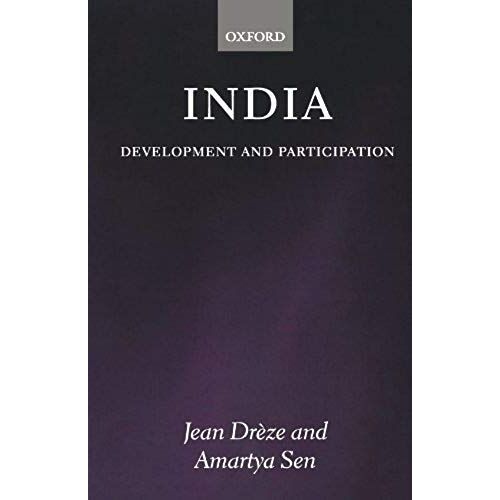
Présentation India Format Broché
- Livre Économie


This book explores the role of public action in eliminating deprivation and expanding human freedoms in India. The analysis is based on a broad and integrated view of development, which focuses on well-being and freedom rather than the standard indicators of economic growth. The authors place human
Résumé :
This book explores the role of public action in eliminating deprivation and expanding human freedoms in India. The analysis is based on a broad and integrated view of development, which focuses on well-being and freedom rather than the standard indicators of economic growth. The authors place human agency at the centre of stage, and stress the complementary roles of different institutions (economic, social, and political) in enhancing effective freedoms.
In comparative international perspective, the Indian economy has done reasonably well in the period following the economic reforms initiated in the early nineties. However, relatively high aggregate economic growth coexists with the persistence of endemic deprivation and deep social failures. Jean Dr?ze and Amartya Sen relate this imbalance to the continued neglect, in the post-reform period, of public involvement in crucial fields such as basic education, health care, social security, environmental protection, gender equity, and civil rights, and also to the imposition of new burdens such as the accelerated expansion of military expenditure. Further, the authors link these distortions of public priorities with deep-seated inequalities of social influence and political power. The book discusses the possibility of addressing these biases through more active democratic practice....