
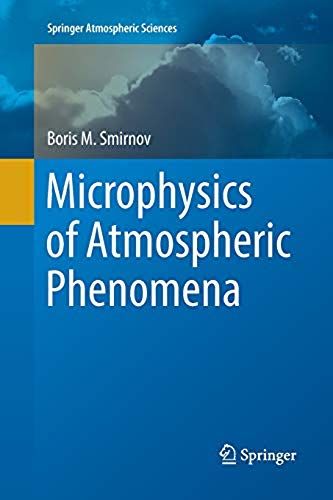
Microphysics of Atmospheric Phenomena - Smirnov, Boris M.
- Format: Broché Voir le descriptif
Vous en avez un à vendre ?
Vendez-le-vôtre164,19 €
Produit Neuf
Ou 41,05 € /mois
- Livraison à 0,01 €
- Livré entre le 5 et le 12 mai
Brand new, In English, Fast shipping from London, UK; Tout neuf, en anglais, expédition rapide depuis Londres, Royaume-Uni;ria9783319808925_dbm

- Payez directement sur Rakuten (CB, PayPal, 4xCB...)
- Récupérez le produit directement chez le vendeur
- Rakuten vous rembourse en cas de problème

Gratuit et sans engagement
Félicitations !
Nous sommes heureux de vous compter parmi nos membres du Club Rakuten !
TROUVER UN MAGASIN
Retour
Avis sur Microphysics Of Atmospheric Phenomena de Smirnov, Boris M. Format Broché - Livre Physique - Chimie
0 avis sur Microphysics Of Atmospheric Phenomena de Smirnov, Boris M. Format Broché - Livre Physique - Chimie
Les avis publiés font l'objet d'un contrôle automatisé de Rakuten.
-
Canine Rehabilitation And Physical Therapy
Neuf dès 156,59 €
Occasion dès 123,46 €
-
Conformal Field Theory
Neuf dès 190,65 €
Occasion dès 130,39 €
-
Fotografias 1976 - 2003 Photographs 1976 - 2003
Occasion dès 120,00 €
-
Guerre Et Paix - Tomes 1 Et 2
6 avis
Occasion dès 116,90 €
-
Hollywood Jewels: Movies, Jewelry, Stars
Occasion dès 106,99 €
-
Martin Chambi: 1920-1950 (Spanish Edition)
Occasion dès 87,72 €
-
Triumph Of Vulcan: Sculptors' Tools, Porphyry, And The Prince In Ducal Florence
Occasion dès 220,00 €
-
The Feynman Lectures On Physics. The New Millennium Edition
1 avis
Neuf dès 241,85 €
-
Illuminations-2cd-Prix Conseille 24.20 E/Ttc
Occasion dès 160,00 €
-
Professional Goldsmithing : A Contemporary Guide To Traditional Jewelry Techniques
Occasion dès 110,38 €
-
La Bâtarde
Occasion dès 120,99 €
-
Play Piano With Diana Krall
Occasion dès 217,99 €
-
A Glastonbury Romance
Occasion dès 111,99 €
-
Hilgard S Introduction To Psychology Rita L. Atkinson
Occasion dès 95,99 €
-
Los Detectives Salvajes (Coleccion Compactos)
Occasion dès 87,99 €
-
Orthodontic Treatment Of Impacted Teeth
Neuf dès 228,30 €
-
Cosaan =: Les Origines (La Civilisation Sereer) (French Edition)
Occasion dès 226,58 €
-
Enseignement Oral De Platon: Une Nouvelle Interprétation Du Platonisme (French Edition)
1 avis
Occasion dès 149,99 €
-
Maison Martin Margiela : Street Special Edition Volumes 1 & 2
Occasion dès 190,00 €
-
A Practical Guide To Chemical Peels, Microdermabrasion & Topical Products
1 avis
Neuf dès 158,90 €
Produits similaires
Présentation Microphysics Of Atmospheric Phenomena de Smirnov, Boris M. Format Broché
- Livre Physique - Chimie


Résumé :
This book investigates elementary processes in the Earth?s atmosphere involving photons, electrons, ions, radicals, and aerosols. It is based on global atmospheric models such as the standard atmospheric model with averaged atmospheric parameters across the globe and over time, the Earth?s energetic balance, and the global electric circuit that allows to analyze fundamental atmospheric properties to be analyzed. Rate constants of elementary processes in the Earth?s atmosphere, together with measured atmospheric parameters and existing concepts of atmospheric phenomena, are used in the analysis of global and local atmospheric processes. Atmospheric photoprocesses result from the interaction of solar radiation with the atmosphere and processes involving ions, oxygen atoms, excited atomic particles and ozone molecules. Atmospheric electricity as a secondary phenomenon to atmospheric water circulation results in a chain of processes that begins with collisions of water aerosols in different aggregate states. Cosmic rays are of importance for atmospheric electricity, as they create positive and negative ions in the air. Air breakdown in an electric field of clouds in the form of lightning may develop under the influence of cosmic ray-created seed electrons, which are necessary for electron multiplication in ionization wave-streamers. The upper atmosphere (ionosphere) is formed under solar radiation in a vacuum ultraviolet spectrum, and absorption of this radiation leads to air photoionization. The greenhouse effect is determined by atmospheric water, whereas transitions between a water vapor and aerosols may lead to a change in atmospheric optical depth. Carbon dioxide contributes in small portions to the atmospheric greenhouse effect. Cosmic rays are of importance for atmospheric discharge, the origin of lightning and cloud formation in the first stage ofaerosol growth. This book provides a qualitative description of atmospheric properties and phenomena based on elementary processes and simple models.
Biographie:
Boris M. Smirnov was born in 1938 in Moscow. In 1962, he graduated from Moscow's Engineering-Physical Institute in theoretical nuclear physics and obtained his Doctor of Phys. Mat. Science in 1968. He became Professor of physics in 1970. Between 1962 and 1982, he was Head of Laboratory at the Kurchatov Institute of Atomic Energy (Moscow), then from 1982 to 1986, Head of Laboratory at the Institute of Thermophysics (Novosibirsk), and from 1986, Head of Laboratory and Head of Department, and, currently, Main Scientist at the Joint Institute for High Temperatures of the Russian Academy of Science. B.M. Smirnov was Member of the editorial board of several journals of various publishers. He was Professor at the Moscow Power Institute, Novosibirsk, State University and the Moscow Institute of Science and Technology, and is Laureate of the National Prize of Russia. His research focuses on theoretical physics, atomic, molecular, cluster, plasma, and chemical physics. He is the author of 60 books and about 500 papers....
Sommaire:
This book investigates elementary processes in the Earth's atmosphere involving photons, electrons, ions, radicals, and aerosols. It is based on global atmospheric models such as the standard atmospheric model with averaged atmospheric parameters across the globe and over time, the Earth's energetic balance, and the global electric circuit that allows to analyze fundamental atmospheric properties to be analyzed. Rate constants of elementary processes in the Earth's atmosphere, together with measured atmospheric parameters and existing concepts of atmospheric phenomena, are used in the analysis of global and local atmospheric processes. Atmospheric photoprocesses result from the interaction of solar radiation with the atmosphere and processes involving ions, oxygen atoms, excited atomic particles and ozone molecules. Atmospheric electricity as a secondary phenomenon to atmospheric water circulation results in a chain of processes that begins with collisions of water aerosols in different aggregate states. Cosmic rays are of importance for atmospheric electricity, as they create positive and negative ions in the air. Air breakdown in an electric field of clouds in the form of lightning may develop under the influence of cosmic ray-created seed electrons, which are necessary for electron multiplication in ionization wave-streamers. The upper atmosphere (ionosphere) is formed under solar radiation in a vacuum ultraviolet spectrum, and absorption of this radiation leads to air photoionization. The greenhouse effect is determined by atmospheric water, whereas transitions between a water vapor and aerosols may lead to a change in atmospheric optical depth. Carbon dioxide contributes in small portions to the atmospheric greenhouse effect. Cosmic rays are of importance for atmospheric discharge, the origin of lightning and cloud formation in the first stage ofaerosol growth. This book provides a qualitative description of atmospheric properties and phenomena based on elementary processes and simple models. ...
Détails de conformité du produit
Personne responsable dans l'UE