
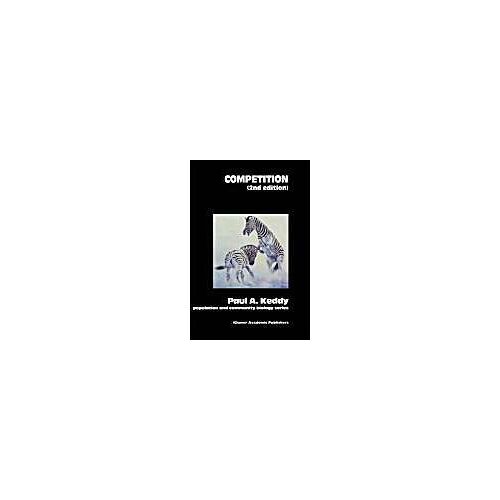
Competition - Keddy, P. A.
- Format: Relié Voir le descriptif
Vous en avez un à vendre ?
Vendez-le-vôtre305,73 €
Produit Neuf
Ou 76,43 € /mois
- Livraison : 3,99 €
- Livré entre le 1 et le 7 août

- Payez directement sur Rakuten (CB, PayPal, 4xCB...)
- Récupérez le produit directement chez le vendeur
- Rakuten vous rembourse en cas de problème

Gratuit et sans engagement
Félicitations !
Nous sommes heureux de vous compter parmi nos membres du Club Rakuten !
TROUVER UN MAGASIN
Retour
Avis sur Competition Format Relié - Livre Beaux arts
0 avis sur Competition Format Relié - Livre Beaux arts
Les avis publiés font l'objet d'un contrôle automatisé de Rakuten.
-
Passion & Tradition Boulangères
Occasion dès 390,00 €
-
Torsi Torses Nus
Occasion dès 270,00 €
-
Quantum Chemistry, 2nd Edition
1 avis
Neuf dès 199,48 €
-
Art Of Merit: Studies In Buddhist Art And Its Conservation
Neuf dès 284,14 €
-
Paolo Roversi Livre Nudi
2 avis
Occasion dès 175,00 €
-
Imagine Too!
1 avis
Neuf dès 191,68 €
-
Seamanship In The Age Of Sail
Occasion dès 215,00 €
-
Art And Devotion At A Buddhist Temple In The Indian Himalaya
Neuf dès 180,99 €
-
Isles Of Gold: Antique Maps Of Japan
Occasion dès 174,99 €
-
Numicon: Homework Activities Intervention Resource - 'maths Bag' Of Resources Per Pupil
Neuf dès 154,00 €
-
Instruction Particuliere Et Secrete A Mon Fils: Oeuvres Spirituelles Classiques
Occasion dès 296,45 €
-
Winogrand Figments From The Real World
Occasion dès 170,99 €
-
Cryogenic Heat Transfer
Neuf dès 214,99 €
-
Genre In Archaic And Classical Greek Poetry: Theories And Models
Neuf dès 267,64 €
-
The Lord Of The Rings
Neuf dès 183,21 €
-
Nuancier Dcs Cmyk Pro
Occasion dès 230,00 €
-
Dépression Et Anxiété : Comprendre Et Surmonter Par L'approche Cognitive
Occasion dès 163,95 €
-
L'ecole De Paris, 1945-1965: Dictionnaire Des Peintres (Dictionnaires)
2 avis
Occasion dès 166,41 €
-
Jock Sturges
Occasion dès 215,18 €
-
Origami Design Secrets
Neuf dès 166,41 €
Produits similaires
Présentation Competition Format Relié
- Livre Beaux arts


Résumé :
Competition is one of the most important factors controlling the distribution and abundance of living creatures. Sperm cells racing up reproductive tracts, beetle larvae battling inside single seeds, birds defending territories, and trees interfering with the light available to neighbours, are all engaged in competition for limited resources. Along with predation and mutualism, competition is one of the three major biological forces that assemble living communities. Recent experimental work, much of it only from the last few decades, has enhanced human knowledge of the prevalence of competition in nature. There are acacia trees that use ants to damage vines, beetles that compete in arenas for access to dung balls, tadpoles that apparently poison their neighbours, birds that smash the eggs of potential competitors, and plants that associate with fungi in order to increase access to soil resources. While intended as an up-to-date reference work on the state of this branch of ecology, the many non-technical examples will make interesting reading for those with a general interest in nature. Greatly expanded from the first prize-winning edition, there are entirely new chapters, including one on resources and another on competition gradients in nature. The author freely ranges across all major taxonomic groups in search of evidence. The question of whether competition occurs is no longer useful, the author maintains; rather the challenge is to determine when and where each kind of competition is important in natural systems. For this reason, variants of competition such as intensity, asymmetry and hierarchies are singled out for particular attention. The book concludes with the difficulties of finding general principles in complex ecological communities, and illustrates the limitations on knowledge that arise out of the biased conduct of scientists themselves. Competition can be found elsewhere in living systems other than ecological communities, at sub-microscopic scales in the interactions of enzymes and neural pathways, and over large geographic areas in the spread of human populations and contrasting ideas about the world. Human societies are therefore also examined for evidence of the kinds of competition found among other living organisms. Using an array of historical examples, including Biblical conflicts, the use of noblemen's sons in the Crusades, the Viking raids in Europe, strategic bombing campaigns in the Second World War, and ethnic battles of the Balkans, the book illustrates how most of the aspects of competition illustrated with plants and animals can be extended to the interactions of human beings and their societies.
Détails de conformité du produit
Personne responsable dans l'UE