
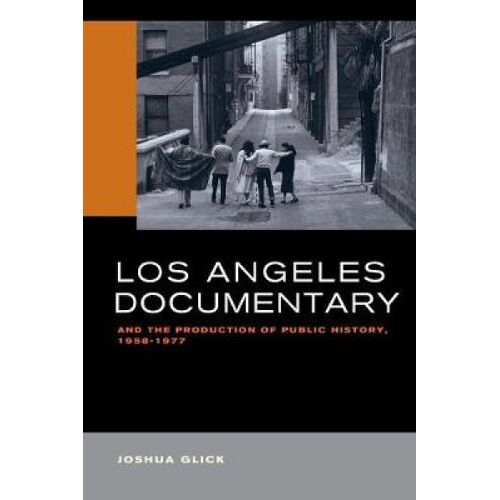
Los Angeles Documentary and the Production of Public History, 1958-1977 - Joshua Glick
- Format: Broché Voir le descriptif
57,57 €
Produit Neuf
Ou 14,39 € /mois
- Livraison à 0,01 €
- Livré entre le 26 août et le 11 septembre
Brand new, In English, Fast shipping from London, UK; Tout neuf, en anglais, expédition rapide depuis Londres, Royaume-Uni;ria9780520293717_dbm
Nos autres offres
-
65,11 €
Produit Neuf
Ou 16,28 € /mois
- Livraison à 0,01 €
Nouvel article expédié dans le 24H à partir des Etats Unis Livraison au bout de 14 à 21 jours ouvrables.
Voir le détail de l'annonce

- Payez directement sur Rakuten (CB, PayPal, 4xCB...)
- Récupérez le produit directement chez le vendeur
- Rakuten vous rembourse en cas de problème

Gratuit et sans engagement
Félicitations !
Nous sommes heureux de vous compter parmi nos membres du Club Rakuten !
TROUVER UN MAGASIN
Retour
Avis sur Los Angeles Documentary And The Production Of Public History, 1958 - 1977 de Joshua Glick Format Broché - Livre
0 avis sur Los Angeles Documentary And The Production Of Public History, 1958 - 1977 de Joshua Glick Format Broché - Livre
Les avis publiés font l'objet d'un contrôle automatisé de Rakuten.
Présentation Los Angeles Documentary And The Production Of Public History, 1958 - 1977 de Joshua Glick Format Broché
- Livre


Biographie:
Joshua Glick is an Assistant Professor of English, Film, and Media Studies at Hendrix College and a Fellow at the Open Documentary Lab, MIT. He teaches courses on global Hollywood, race and representation, documentary history and theory, and emerging media formations....
Sommaire:
Los Angeles Documentary and the Production of Public History, 1958-1977 explores how documentarians working between the election of John F. Kennedy and the Bicentennial created conflicting visions of the recent and more distant American past. Drawing on a wide range of primary documents, Joshua Glick analyzes the films of Hollywood documentarians such as David Wolper and Mel Stuart, along with lesser-known independents and activists such as Kent Mackenzie, Lynne Littman, and Jes?s Salvador Trevi?o. While the former group reinvigorated a Cold War cultural liberalism, the latter group advocated for social justice in a city plagued by severe class stratification and racial segregation. Glick examines how mainstream and alternative filmmakers turned to the archives, civic institutions, and production facilities of Los Angeles in order to both change popular understandings of the city and shape the social consciousness of the nation....
Détails de conformité du produit
Personne responsable dans l'UE